The Green Thread: The Hopscotch Test

I recently saw a short video that has stayed with me.

Someone had drawn a simple hopscotch grid in chalk on a pavement. Nothing complicated. Just a few numbered squares. The camera then recorded the reactions of adults walking past. Many people didn’t notice it at all. Some were looking at their phones. Some stepped around it unsure what it was, others passed without a glance and some saw it and smiled before continuing on their way.

But then something interesting happened. Every so often, somebody hopped. Perhaps only for a second sometimes only a couple of squares. Sometimes alone but often with a friend. Almost always laughing.

And it made me wonder:

What exactly were they responding to?

The chalk?
The game?
A memory?
Or the invitation?

As adults, we spend much of our lives moving with purpose. From meeting to meeting.
Task to task. Notification to notification. We become very good at getting to the next place often without hestiation.

Less often do we allow ourselves to simply experience where we already are. Yet many of the things we value about nature work in a remarkably similar way to that hopscotch grid.

A winding path invites exploration.
A fallen tree invites balancing.
A stream invites curiosity.
A meadow invites wandering.
A bench invites pause.

None of these things demand our attention. They simply offer it. Whether we accept the invitation is up to us.

Perhaps that is one reason why parks and green spaces matter. Not only because they support biodiversity, improve air quality, reduce flooding, store carbon, or contribute to physical and mental health. They do all of those things. But they also provide something harder to measure.

Permission – Permission to slow down, to notice, to wonder and to play.

Children rarely need encouragement to do this. They instinctively turn spaces into adventures. A patch of grass becomes a kingdom, a stick becomes a sword, wand or fishing rod and a puddle becomes an irresistible challenge.

Adults often need reminding. Not because we have lost the ability. Because we have become distracted from it. Perhaps that is why the adults who hopped along the chalk squares were smiling. For a moment they stepped outside the script and were not simply passing through a space they were participating in it.

The hopscotch grid disappeared eventually. Rain would have washed it away. But for a few hours it changed how people moved through that place. It nudged them from observer to participant. And perhaps that is one of the quiet lessons hidden within a City of Nature. The goal is not simply to create greener spaces. It is to create places that invite people back into relationship with the world around them.

Places that encourage us to notice.

To connect.

To explore.

And every now and then –

to hop.

Reflections from the Bridge: A Valued City

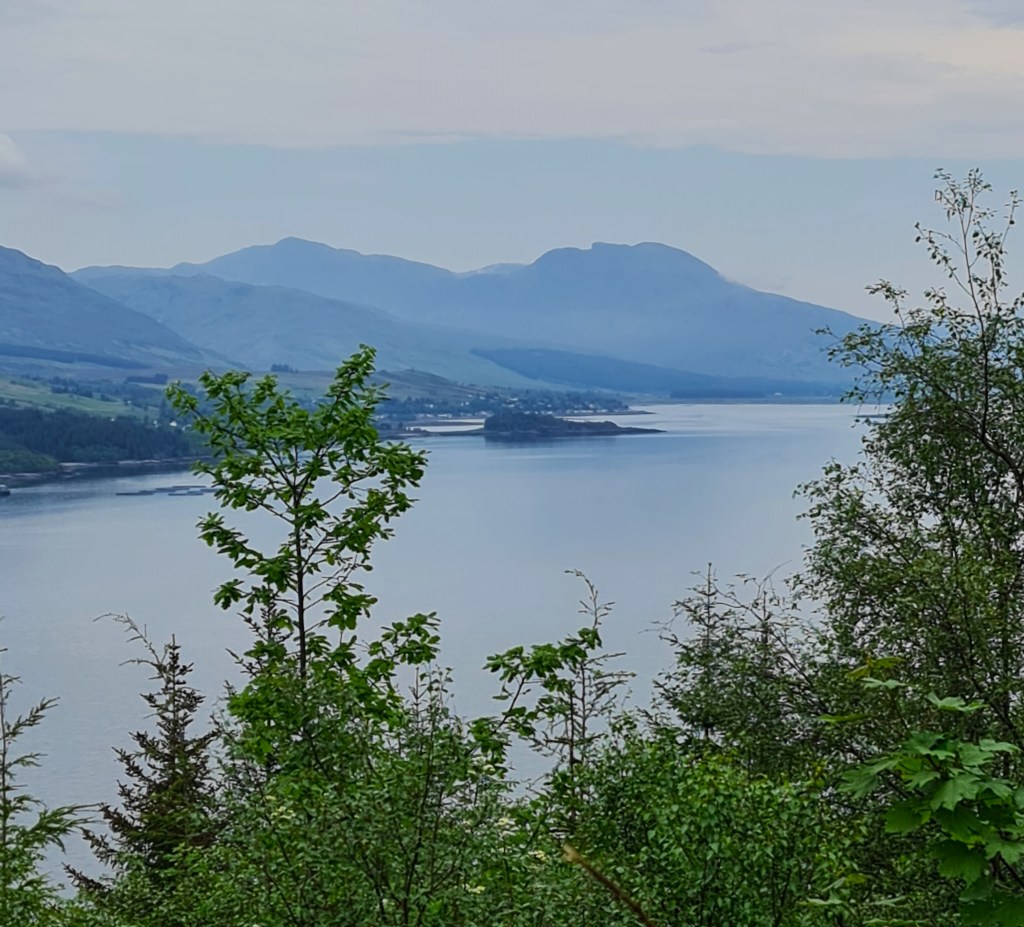
A woman looking at a city across a nature lined river from a bridge.

The Green Pages are for exploring some of the deeper ideas, questions and connections sitting underneath Birmingham’s City of Nature journey.

They are part storytelling, part systems thinking, these reflections wander through parks, waterways, communities, governance, memory, belonging and the living systems that quietly shape everyday life in the city. Some pieces begin with policy. Some begin with a walk, a conversation, or a moment of noticing.

All are connected by the same question: what might it mean to truly live as part of a living system?

“A Valued City” was always one of the ideas we grappled with most while developing the City of Nature plan. Not because value is unimportant. Quite the opposite.

Money is a necessary human construct.
Cities need funding.
Parks need investment.
People need livelihoods.
Organisations need ways to sustain themselves and plan for the future.

And yet, somewhere underneath all of that sits another truth: life itself does not operate through financial value. Humans existed for a very long time before money.

Forests grew before there were shares and markets. Rivers flowed before accounting systems. Pollinators productively moved through landscapes before economics. Soil organisms built fertility long before anyone tried to calculate “ecosystem services.”

Sometimes I wonder if part of the challenge modern societies face is that we have become so focused on assigning value that we risk forgetting how to recognise life itself. And perhaps that is why humans are often drawn to bridges, they allow you to see things from a different point of view.

Standing above the moving water can simulate a different kind of thinking and recently I found myself wondering: if a river could speak, what would it say about all this?

Perhaps something like this:

“You measure cost and value. I measure time and movement. You carry bank notes and credit cards, I simply carry:
rain,
sediment,
nutrients,
memory,
life.

Long before your roads and markets, I was already moving through the landscape. You built beside me. Then over me. Then away from me and eventually you began searching for me again.

Sometimes you call me a resource, sometimes infrastructure and sometimes risk. But I was never. am never only one thing. I am movement connecting infinitely small lives:
fungi,
roots,
moss,
bacteria,
fish,
birds,
soil,
rain,
and as human hands trail briefly through me I am time – spent well.

You calculate value because your systems require it. But life existed before value did.”

And perhaps that is the balance we continue trying to navigate within a City of Nature. Not rejecting economics or investment because those things matter – obviously.

But remembering that financial value is ultimately a human framework placed around something much older and more fundamental: the living system itself.

A system made from countless tiny relationships happening continuously all around us. Mostly unnoticed, unpriced and yet sustaining everything.

Perhaps that is why people become quiet beside water. Some older part of us recognises something there. Not ownership. Not productivity. Just flow. Interdependence and belonging to something larger than ourselves.

Can adults ever really see “just mud” again?

Green Pages is a space for exploring some of the quieter reflections sitting underneath Birmingham’s City of Nature journey.

Part nature writing, part systems thinking, these pieces often begin with ordinary moments:
a walk,
a conversation,
a bridge,
a memory,
mud on a child’s hands.

From there, they gently wander into bigger questions about belonging, wellbeing, nature connection, memory and what it means to remain connected to the living world in modern urban life.

This reflection began with a surprisingly simple question:

Can adults ever really see “just mud” again?

I found myself thinking about this after hearing the line in Men in Black about “never being able to just look at the stars anymore.” Once we understand something deeply, can we ever see it simply again.

As we learn more and more over the years mud stops being “just mud” and becomes:
soil ecology,
fungi,
decomposition,
carbon,
flood management,
bacteria,
worms,
the smell of soil after rain becomes – petrichor

Layer upon layer of meaning accumulates through life. Perhaps that is true of many things. Canals become infrastructure and history. Trees become biodiversity and climate resilience. Water becomes systems, sustainability and risk.

And yet children often encounter these things differently. Mud is not part of “environmental infrastructure.”
It is cold.
Wet.
Messy.
Funny.
Something to jump in, dig through and explore.

The immediate experience comes first.

Maybe part of helping children connect with nature is not only teaching them the facts about the environment that we have learned. Perhaps it is also about protecting that direct relationship with the living world before too many layers settle over it.

Not because knowledge is wrong. Knowledge matters deeply. But perhaps wisdom is learning how to hold both things at once, understanding complexity while still being able to feel wonder. To know the science of soil and still delight in muddy puddles. To understand biodiversity loss and still be excited by muddy pawprints.

Because perhaps a child is not simply our “younger self.” Perhaps the child is actually the oldest layer of consciousness we still carry.

The first noticer, the first self to experience rain, mud, trees, fear, joy, light and belonging without explanation. Everything else came afterwards. Responsibilities and assigned roles becoming professional identities and knowledge creating layer upon layer of accumulated self.

But underneath all of that, something older remains. The original consciousness that first encountered the world directly. The source code of being human. And perhaps that is why nature connection matters so profoundly. Because when children play in mud, follow insects along a twig, climb trees, stare into water or lie in long grass watching clouds move overhead, they may not simply be “learning about nature.” They may be forming the deepest layer of consciousness they will carry for the rest of their lives.

The baseline from which future belonging, curiosity, empathy and wonder will grow. Perhaps decades later, after careers, responsibilities, losses, systems and accumulated selves have gathered around them, something unexpectedly cuts through: the smell after rain, sticks floating on water beneath a bridge, summer air through an open window, bees bumbling into foxgloves beside a path, distant birdsong at dusk.

And for a moment, the intervening layers become thinner. Not gone but for a while at least – translucent.

And something ancient inside them quietly remembers the time before productivity, before identity, before performance, before explanation, when they belonged to the living world.

Perhaps that is the real importance of helping children connect with nature. Not simply because nature needs protecting. Not because children need to accumulate knowledge. But because somewhere in the future, the latest version of that child may desperately need to remember who they were before the layers settled over them.

The Quiet Work of Rangers

Friday Feelings – End of Week reflections.

As my conversations have moved beyond those who already work closely with nature, I have noticed people saying recently: “I didn’t know Birmingham had a Ranger Service.”

And yet, once you know you begin noticing the work Rangers do, and you start seeing their presence across the city’s green spaces.

Not always directly. Often quietly. But once you know you don’t forget.

A meadow that has been carefully managed rather than simply left.
A volunteer group that feels supported and connected.
A school session helping children notice insects, trees or birds for the first time.
A wellbeing walk.
A repaired relationship between people and a park.
A calm conversation on a difficult day.
A familiar face regularly checking in across a network of spaces and communities.

Much of the work of Rangers sits in that space between ecology, public service and human connection.

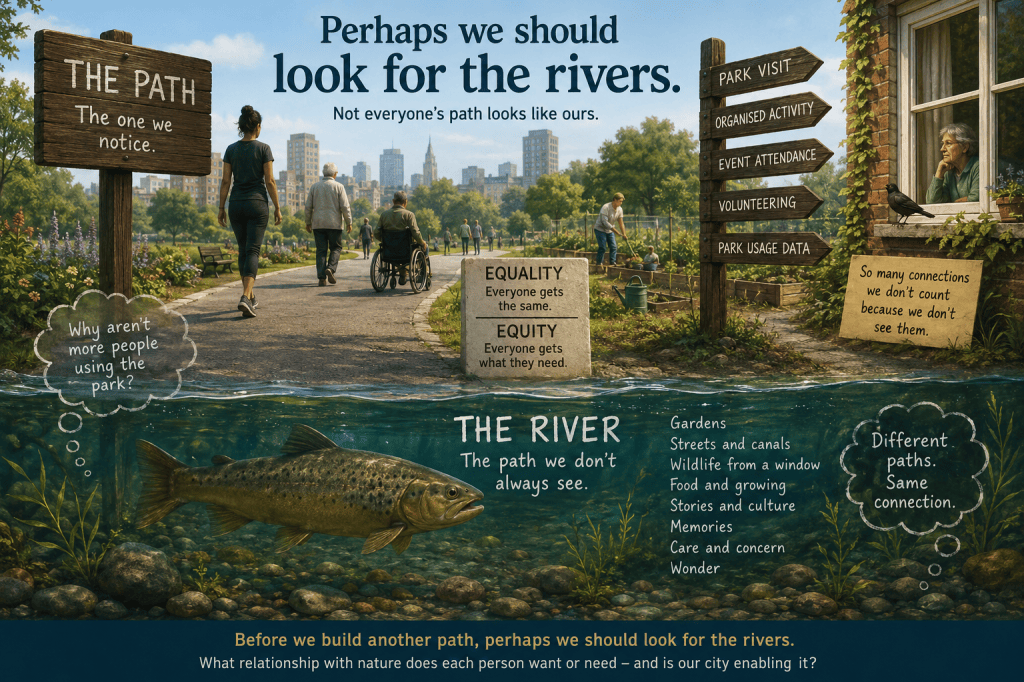
Across Birmingham’s “Red Wards” https://naturallybirmingham.org/environmental-justice/ and beyond, Rangers help connect people and nature every day.

That can include:

Supporting habitats and wildlife,
Leading walks and outdoor activities,
Working with volunteers and Friends groups,
Supporting schools and learning,
Helping people feel welcome outdoors,
Managing meadows, woodlands and nature spaces,
Building local partnerships,
and sometimes simply being a reassuring presence in a park.

What strikes me most is that much of this happens with very small teams covering very large areas. In some places there may only be one Ranger supporting an entire network of parks, projects, partnerships and people.

And yet the work continues. Not perfectly and not without pressure. But steadily.

There is resilience in that.

I think one of the strange things about difficult periods, particularly in public services and civic life, is that people can become hesitant to celebrate the work that is happening because there is still so much left unresolved.

Budgets remain difficult.
Teams are stretched.
Expectations often exceed capacity.
Nothing feels fully “finished”.

And Birmingham, like many places, is living through a politically and financially difficult period where uncertainty can easily overshadow quiet achievement.

But I do not think acknowledging people’s work means pretending everything is solved.

In fact, sometimes appreciation matters most precisely when circumstances are hard.

Because despite the pressures, Rangers are still there.

Still supporting parks.
Still supporting nature.
Still supporting communities.
Still helping maintain the fragile but important connections between people and green spaces across the city.

The reality is that Rangers cannot do everything — and no one expects them to.

But what they often bring is something harder to measure and easier to miss until it disappears:

Continuity,
Local knowledge,
Relationships,
Care,
Presence,
and connection.

The thread that quietly helps hold things together.

A City of Nature is not built only through strategies, governance structures or plans on paper.

It is also built through the steady everyday work of people who show up in all weathers and keep helping those connections grow: between people and place, between communities and nature, between wellbeing and green space and between organisations trying to work together across a complicated city.

Sometimes the work is highly visible, they do wear high viz vests. But sometimes it is still almost invisible. But invisible does not mean unimportant.

Perhaps that is the feeling sitting underneath this piece.

Not grand statements.
Not polished narratives.
Just a moment of noticing properly.

And a quiet thank you to Birmingham’s Rangers. Some of the people that are still out there helping keep those green threads connected across the city.

If you want to connect with the city’s rangers you can email them on: Cityofnature@birmingham.gov.uk

Burbury Park – Wild at Heart

Yesterday, I spent an hour and a half in Burbury Park.

It was one of the warmest days of the year so far. As I entered the park, the sound of children playing carried across the space telling a story of laughter, movement and life already unfolding before I reached the activity.

I spotted the green and white “Welcome!” banner flapping in the breeze and headed over to join Birmingham’s Park Rangers Penny and Teresa who were already playing with children and their families. I was going to say working with families, but although it is their job – yes. The word work just doesn’t do the scene justice.

The task was simple. Using clothes pegs as makeshift beaks, the children carefully picked up small sticks, working together to build a bird’s nest. There was concentration, cooperation, a shared sense of purpose. Once complete, the large nest was lined with soft dandelion flowers a gentle, instinctive act of care for the eggs that were laid in their imaginations. There’s the magic again.

Then came the next creation. Willow sticks and ivy trails became bird feeders, sculptures, bug hotels. Each one was different, shaped by unrestricted creativity and hands-on exploration. I spent time with Sonia, a brilliant local “Green Champion”, as we worked together on her own design. Later, she proudly modelled it as April’s “must-have” fashion item a lovely moment of joy that brought everyone together.

There was movement.
There was laughter.
There was learning, but not in a way that needed to be named as such.

And there was trust, between children and adults and between people and place. Conversation and ideas flowed and wove us all together just like the ivy wove the willow into something useful and joyful.

Towards the end, we gathered for a game of Wild Pairs, a memory test with cards face down on the grass that brought everyone into a shared circle. Each turn brought words of consolation and support or cheers of success as pairs were found and so much laughter. The last pair was found and brought the session to a natural close.

Penny and Theresa were heading back to the Lickey Hills, but before they went they pointed out the new noticeboard in the park were future events will be advertised which includes a City Nature challenge – Bio Blitz spotting and identifying plants and animals in the park.

Different ages, different roles, all part of the same moment. It lasted just over an hour. In a small urban park. And yet, it held everything.

It was accessible: open, local, easy to join.
It was green: rooted in nature, materials, and place.
It was healthy: movement, fresh air, connection, calm.
It was involved: people participating, creating, contributing.
It was valued: through care, attention, and shared experience.

From the outside, it could look simple. But behind it sits collaboration, planning, relationships, funding and that word again – trust! The things that makes these small but powerful moments possible.

And on the day, what remains is something else entirely.

An hour in the park. And a reminder that when the conditions are right, everything can come together – naturally.

You can find out more about the Councils Ranger Service Wild at Heart – Healthy Parks Programme here: https://naturallybirmingham.org/out-and-about-with-birminghams-park-rangers/

Distributed Leadership

There is a particular kind of powerful leadership that doesn’t always announce itself.

It doesn’t need to sit at the top of a structure.
It doesn’t always come with a leadership title.
And it rarely asks for permission.

Across the City of Nature Alliance, I see it often. People who notice something – a gap, a need, an opportunity and simply decide to act. Not because they have been told to and not because it sits neatly within a role description. But because it matters.

This kind of leadership doesn’t belong to one role, one background, or one type of person. It can come from anywhere. From those with years of experience, or those just beginning. From professionals, volunteers, community leaders, neighbours. What matters is not what you are or who you are but that you care enough to step forward.

Often, I notice this kind of natural leadership emerging in places and from people we don’t always formally recognise as leaders. Many of the City of Nature leaders are women, by no means only women, but when I look around it is a space that feels very different.

Shared leadership is not about everyone doing the same thing. It is about movement. One person steps forward when something needs to happen. Others support, contribute, or step back. Then, in a different moment, someone else takes the lead.

It shifts.
It responds.
It flows.

There is trust in this. Not always spoken, but understood. That when someone steps forward within their sphere and others recognise it.

Respect it.
And make space for it.

For shared leadership to work well, it depends on something deeper: That people feel able to step forward.

That their voice is welcomed.
That their contribution is valued.
That they are treated with respect.

It also means noticing who is in the room and who is not.

It means creating conditions where more people feel able to take part, not just those who are most confident or most familiar with the system.

We often recognise leadership most clearly at a strategic level. In plans, frameworks, and decisions about direction. But there is another form of leadership that is just as important and not always named as such. Leadership in delivery.

This is the leadership that happens: on the ground, in real time, n response to people, place and conditions.

    It is the leadership of:

    Adapting
    Noticing
    Making things work
    Holding relationships
    Responding when something doesn’t go to plan

    It is easy to overlook because it doesn’t always look like leadership in the traditional sense. But without it, strategy cannot succeed and more than that:

    Delivery should not only follow strategy – it should inform it

    Those closest to the work, to communities, to places, to day-to-day realities hold insights that cannot always be seen from a distance. When those insights are heard and valued, strategy becomes stronger, more grounded and more responsive.

    Through the development of the City of Nature Alliance, something else is beginning to emerge.

    Not a single point of leadership, but something more – distributed.

    A model where leadership is shared across organisations, roles and individuals shaped by context, capability and care.

    It is still forming.
    It is not fixed.
    But it offers a different way of working.

    Shared leadership is not only about stepping forward. It is also about how we respond when others do.

    Do we listen?
    Do we support?
    Do we make space?

    We often say someone needs to take a lead, but leadership is not just taken it is recognised and enabled by others.

    Perhaps we don’t always pause to name this as leadership because it doesn’t always look like leadership in the traditional sense.

    But it is there.
    Every day.
    In actions, decisions, and care.

    In many ways, this kind of leadership is closer to how nature works than the structures we often try to impose.

    It grows where the conditions are right.
    It strengthens with care, attention and trust.
    It shifts, adapts and responds over time.

    And perhaps that is the shift we are beginning to see.

    Not leadership held in one place,
    but something more shared, more responsive — more human.

    Shared leadership is not about who leads, but about creating the conditions where anyone can, and where all contributions are recognised as part of something larger.

    The City That Gardens Itself

    We often talk about designing cities. Planners draw maps, engineers build roads, and policies shape how neighbourhoods grow. In best case situations individuals with an interest in the area co-design the plans and are involved with the delivery and ongoing care. But if you look closely, another quieter process is always happening alongside these plans. In the places that were designed and built 20, 50, 100 years ago quiet and often slow change happens even in cities.

    Cities are constantly re-gardening themselves.

    Urban ecologists sometimes describe cities this way: not simply as places that are built and maintained by authorities, but as living landscapes shaped by many small acts of care and movement.

    Some of this happens through people. A resident plants flowers on a grass verge. Volunteers restore a meadow in a local park. A bowl of water is placed in a garden for birds. Children explore a patch of grass and as they begin to notice the life around them they follow the path a fox takes to a short cut through the broken fence. All of these slowly edit the landscape.

    As we notice more we realise – people are not the only gardeners of the city. Birds carry seeds across neighbourhoods and drop them in new places. Squirrels bury nuts that become future trees. Insects pollinate flowers that will spread across the landscape. Wind lifts seeds and carries them to unexpected corners. Rivers and streams reshape the land, move soil and create new habitats over time.

    Together these forces create a living, shifting patchwork of nature within the urban landscape.

    Sometimes these changes are gentle and positive. Sometimes they remind us that our own actions can reshape the environment in ways we must learn to manage carefully. But the underlying truth remains: cities are not static places. They are constantly evolving ecosystems.

    When we begin to see the city this way, our role changes slightly. Instead of thinking only about designing and controlling urban spaces, we can also think about how to support the many gardeners already at work.

    Residents planting flowers. Volunteers caring for parks and green spaces. Birds spreading blackberries (or brambles) across neighbourhoods. Wind and water sculpting the landscape with a power that can build or destroy, but is constantly changing what was there yesterday.

    All are part of the living ecology of the city.

    Perhaps the task for those who care about nature in cities is not simply to design new landscapes, but to notice and nurture the quiet ways the city is already gardening itself.

    The Old Tupperware Box

    This morning I was looking in the freezer for my leftover cauliflower cheese for lunch.

    It needed to come out early to defrost. As I reached in, I picked up an old plastic container slightly worn now after years of use.

    And with it came a memory.

    The box was given to me about eight years ago by the mum of a young child who used to come to the Teeny Explorers sessions at the Lickey Hills, a programme I ran for children under five and their families.

    One week we made a picnic together. Nothing elaborate just simple things. Jam sandwiches. Cucumber sandwiches. The sort of food that children can help prepare and share together on a blanket outdoors.

    After the session the mum came over to me. She told me that sharing food was something very special in her culture. She said the moment we had created together had made her feel very happy. She wanted to thank me not with words alone, but by sharing something she had made at home.

    The following week she handed me the box with a slice of vegetable quiche inside.

    I remember the moment clearly because it felt like more than a thank you. It was an act of connection. A small exchange of kindness between people who had come together through nature, children and community.

    Over the years, working with families, volunteers and communities, I have received many tokens of appreciation. Some have been cards, drawings or small gifts that I have carefully kept. The edible ones, of course, disappeared quickly!

    But this box stayed.

    It sits quietly in my kitchen, used for leftovers, lunches and the everyday business of life. Yet every time I see it, it reminds me of that moment of sharing.

    In community work we often talk about outcomes, projects and programmes. But what stays with us most are these small human moments when people feel seen, welcomed and connected.

    Sometimes appreciation arrives in the simplest of forms.

    A sandwich shared.
    A homemade quiche.
    An old Tupperware box that becomes a lasting reminder of kindness.

    And perhaps, if we are honest, something else too.

    A reminder that at the heart of community and of caring for nature together there is always a quiet thread of connection, generosity and yes… love.

    The moment of meeting a bee

    Bumble bees on lavender

    It happens on the garden path, in that ordinary corridor between the back door and the day.

    You are not looking for anything in particular. The air still carries the coolness of morning, though the sun has begun its quiet work. Gravel shifts under your step. A blackbird is somewhere behind you, rehearsing.

    And then — movement.

    A small body crosses your field of vision. Not fast, not slow. Just present.

    A bee.

    Time does not stop, instead it seems to expand.

    Your foot, halfway between lifting and landing, pauses without instruction. Your breath slows. The world seems to widen around this small intersection.

    You see the bee as a singular creature. Velvet-backed. Gold-banded. Suspended in flight with a softness that contradicts the invisible effort holding it there. Its wings move too quickly to see — only a suggestion of motion, a trembling transparency. It hovers at the height of your hand, considering the lavender, the open air, and you.

    You are aware of its fragility. How easily something so small could be broken without intent. How much depends on its continued, unnoticed work.

    For a moment, you are careful in your own body. You become aware of your scale. Your shadow. Your presence in its world.

    You are the weather, suddenly.

    But from the bee’s eye view, you are not a singular signal.

    You arrive first as a shift in light. A moving interruption against the stable brightness of the sky. Then as motion — vast, slow, unpredictable motion. The ground trembles so faintly with your step, but vibrations travel through soil and stem.

    You are not a person. You are landscape. Obstacle or passage. Risk or irrelevance.

    The bee measures you not with thought, but with all it’s being.

    And then, decision.

    It tilts — not away from you, but past you. Choosing a direction that includes your presence without resistance. It moves through the space beside your shoulder, close enough that you hear it now. almost moving your hair with it’s tiny breeze. Not a sound exactly, but a density.

    A small engine of life passing through.

    You remain still until it has gone.

    Not from fear. From recognition. From wonder.

    That something has occurred which required nothing from you except your willingness not to interrupt it.

    Afterwards, the garden resumes its familiar scale and time.

    But you carry something with you now.

    The knowledge that you were, for a moment, part of another creature’s map of the world.

    Not central. Not important.

    Simply there.

    And it leaves you wondering how many moments like this exist in every day — intersections we barely notice, where our presence alters the landscape for others. Where something small is navigating around us, measuring us, deciding whether the world remains safe enough to continue.

    We rarely see these moments. But they are happening constantly.

    Every action. Every space we occupy. Every decision we make.

    We are always, in ways both visible and invisible, shaping the conditions around us.

    Sometimes the most important thing we can do is simply move with care.

    Because every moment is bigger than we think.

    Notes from a Slow Time Traveller

    I recently realised something that felt both obvious and oddly liberating:
    we are all time travellers.

    I time travelled from 1964 to today. It just took me 62 years to get here.

    When people talk about time travel, they imagine machines, portals, or sudden leaps across centuries. But in reality, most of us are moving through time at a steady, human pace — carrying memories, habits, values, and ways of seeing the world from the eras that shaped us.

    That makes many of us visitors from another time.

    I remember a world before constant connectivity, before nature had to fight so hard for attention, before environmental loss was counted in dashboards and datasets. I also remember when communities felt closer, when knowledge was passed hand to hand, story to story, bench to bench. Those memories aren’t nostalgia; they’re evidence. Proof that things can be different — and therefore can change again.

    Perhaps age isn’t about being “older” at all. Perhaps it’s about being further travelled. More landscapes crossed. More seasons witnessed. More social weather endured.

    In that sense, children are travellers from a future we haven’t reached yet, and older people are messengers from places we can no longer visit. When they meet — in schools, parks, community gardens, on walking routes and shared projects — something powerful happens. A time-bridge forms.

    Nature is the great constant in all of this. Trees that were saplings in my childhood now shade new generations. Rivers remember things we’ve forgotten. Soil holds the long view. When we work with nature — caring for parks, recording wildlife, planting for the future — we’re not just improving places. We’re sending messages forward in time.

    This is slow time travel. No machines required. Just attention, care, and the willingness to learn from both past and future.

    If you see me sitting on a bench, notebook in hand, I’m probably not lost.
    I’m just comparing timelines.