In 1990, as the Voyager 1 spacecraft left our solar system, it turned its camera back towards home for one last photograph.
In that image, the Earth is almost invisible – a tiny pale blue dot suspended in a vast darkness. It inspired one of Carl Sagan’s most memorable reflections:
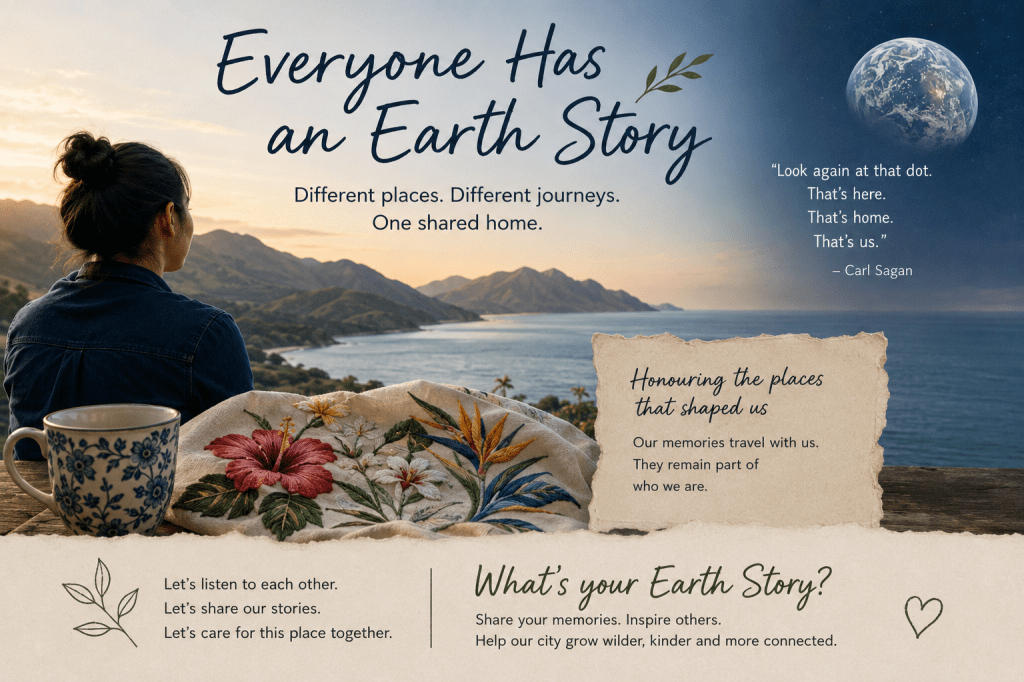
“Look again at that dot. That’s here. That’s home. That’s us.”
Everything we have ever known has happened there.
Every mountain and meadow. Every city and village. Every river and ocean. Every language, every culture, every child, every act of kindness and every disagreement. Every park, every tree and every bird.
Everything.
That image has stayed with me since then, and perhaps it explains why, when we began collecting people’s memories of parks and green spaces, I wanted to call them Earth Stories rather than Nature Stories.
At first glance, the two phrases seem almost interchangeable. But over time I have come to realise they are not.
When we hear the word nature, many of us picture wildlife, forests, flowers or birdsong. We rarely think of the sky above us, the rain that falls, the rivers that shape our landscapes or the ground beneath our feet. We almost never include ourselves.
Yet we are all part of the same Earth. Perhaps that small shift in language matters.
Over many years, I have had some wonderfully honest conversations with people from all over the world about their relationship with the natural world in Britain. Those conversations have taught me something I hadn’t expected.
People didn’t tell me they disliked nature.
They told me they didn’t always recognise it.
The trees were unfamiliar. The birds sounded different. The seasons felt strange. The landscape held none of the memories they had grown up with.
One conversation, in particular, changed how I thought about Earth Stories.
A woman shared a story about a bedspread she had brought with her from the village where she had grown up. It was embroidered with flowers from her home. Whenever she missed her village, she would look at those flowers.
When I first heard her story, I remember thinking, “Is a bedspread an Earth Story.” Then, almost instantly, I realised I was completely wrong. The story wasn’t about the bedspread. It was about recognition and connection.
Those embroidered flowers were more than decoration. They carried memories of a place, a landscape, a childhood and a sense of belonging. Looking at them allowed her, just for a moment, to return home.
That conversation made me realise something else. It isn’t only people who have moved across continents who experience this. I do too.
I was born in Birmingham and spent much of my working life in Birmingham. I know its parks, canals, woodlands and communities well. I care deeply about it and feel connected to it and I do feel I belong.
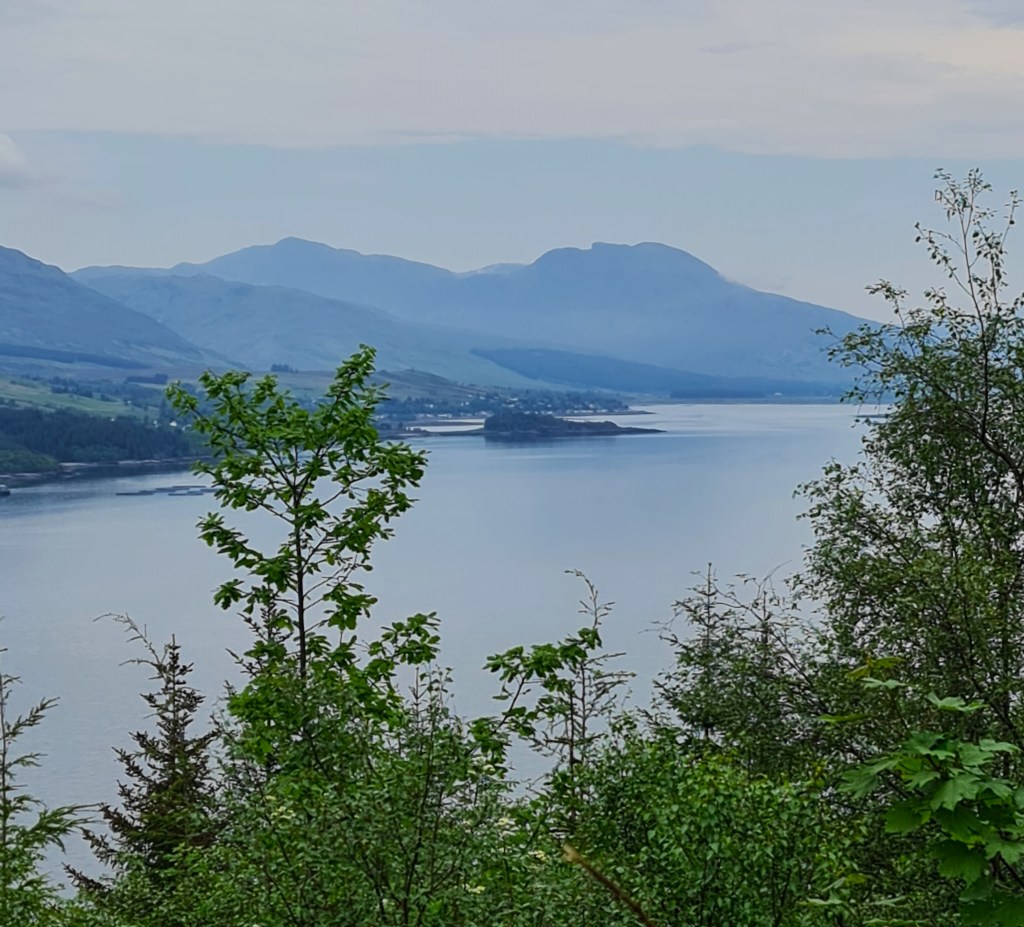
Yet if I’m completely honest, it isn’t city skylines that stirs something deepest within me. It is where the mountains touch the sea – Hvor fjell møter hav or Môr a Mynydd or even Rubha (pronounced “roo-ah”).
When I stand among them, something feels instantly familiar in a way that is difficult to explain. It feels older than memory. Perhaps it is shaped by family stories, by heritage, by generations before me. My own roots reach into Wales, Scotland and Scandinavia. Like many people, my story is woven from more than one place.
The more I have reflected on this, the more I have realised that belonging is rarely simple. We often ask how we can help people connect with nature. Perhaps that isn’t quite the right question. Perhaps we should ask how people come to recognise the place they now call home.
Recognition may be the first step. We recognise. We become familiar. From familiarity grows affection. From affection comes belonging.
And when we feel we belong somewhere, we are much more likely to care for it.
Around the world, many cultures have words that describe this relationship more completely than modern English does. The Māori speak of belonging to place, of guardianship that grows from kinship with the land. In Welsh there is the beautiful word cynefin – the place where you naturally belong, where the landscape has shaped you as much as you have shaped it.
Perhaps English has never lost the feeling. Perhaps it has simply lost some of the words. In a city like Birmingham, where people have arrived from every corner of the world, this feels especially important.
We don’t all begin our Earth Stories in the same place. Some begin beside mountains or rivers. Some among forests, deserts, islands or great cities. Some begin thousands of miles away some just hundreds. None of those stories is more authentic than another. What matters is that we continue to write them.
Perhaps our role is not simply to encourage people to visit parks or learn the names of trees. Perhaps it is to help one another recognise this place while honouring the places that shaped us.
To notice the changing seasons.
To find a favourite path.
To hear birds that gradually become familiar.
To discover views that, over time, become part of our own story.
Because belonging cannot be instructed. It grows through experience.
Through memory.
Through recognition.
Through time.
When Carl Sagan looked back at our tiny pale blue dot, he wasn’t looking at separate countries, cultures or landscapes. He was looking at home.
Every one of us has an Earth Story. Some began where you are now, Some began elsewhere. But together they remind us that we all share the same remarkable world, and every new place we come to know has the potential to become part of who we are.
Perhaps that is what belonging really is.
Not forgetting where our story began, but allowing it to keep growing wherever life leads us.